


Ensure your garage is safe with our top tips to prevent break-ins. Learn how to secure your garage door effectively and protect your belongings today!
Reasons to Love Your Garage Doors
- Your Garage door adds good value to your house
- Your garage door protects the things you need
- You probably go through the garage all the time
- Neglected Garage doors can destroy your needs
- Your Garage doors might hide dangers if you neglect the garage
- A garage can be a lot more fun place than you think
Effective Ways to Burglar-Proof Your Garage Door: Comprehensive Garage Door Security Upgrades and Prevention Strategies

The garage door is one of the most commonly targeted entry points for burglars because it combines direct access to the home with often weaker mechanical and electronic protections, and recent studies through 2023–2024 show garage-targeted thefts remain a significant portion of residential break-ins. This article teaches practical, prioritized steps to prevent garage break-in, covering the most common vulnerabilities, physical upgrades, smart-system defenses, everyday habits that reduce risk, and safe DIY upgrades you can implement today. You will learn how emergency-release fishing works and how to shield it, which deadbolt and side-lock options reliably strengthen doors, and how rolling-code openers, cameras, and motion-activated lighting form a layered defense. The guide includes comparison tables that summarize security trade-offs, step-by-step DIY checklists for manual locks and emergency-release shielding, and recommended placements for cameras and sensors. Through targeted garage door security solutions, including reinforcement of panels and securing attached interior doors, readers will have clear, actionable steps to secure an attached or detached garage and reduce the chance of property theft.
What Are the Common Vulnerabilities in Garage Doors That Burglars Exploit?
Garage doors present a mix of mechanical and electronic weak points that burglars exploit to gain quick entry; understanding these vulnerabilities explains why layered defenses are essential. Attackers commonly use simple tools and techniques—fishing the emergency release, prying weak panels, stealing vehicle remotes, and intercepting outdated opener signals—to bypass protections that seem secure at a glance. Addressing each vector reduces overall risk because security compounds: strengthening panels reduces successful physical attacks, and upgrading electronic systems closes digital attack paths.
Research into garage door opener systems highlights the critical need for robust security protocols to prevent unauthorized access through electronic means.
Garage Door Opener Rolling Code Security Analysis
In this paper, we investigated the security of some widely spread garage door opener systems. We reverse engineered their rolling code protocols, and presented practical attacks on
Garage door openers: A rolling code protocol case study, R AlTawy, 2022
The following list summarizes the top vulnerabilities so you can prioritize upgrades based on your garage type and threat model.
- Emergency-release mechanisms can be accessed through spaces and pulled from outside, allowing manual opening.
- Weak locks and latch points allow pry attacks or brute force to defeat the door.
- Remote control theft and code-grabbing let intruders open doors without physical damage.
- Thin panels and unsecured windows provide quick visual and physical access to interior mechanisms.
- Outdated openers without rolling-code technology are susceptible to replay and interception attacks.
These vulnerabilities show why both physical reinforcement and modern electronic protections matter; next we’ll examine the mechanics of emergency-release fishing and immediate countermeasures to stop that common exploit.
How Does Emergency Release Fishing Compromise Garage Door Security?

Emergency-release fishing is a low-tech but effective method where an intruder inserts a line or tool through a gap or around a window to pull the manual release cord, then disengages the opener and lifts the door. The mechanism exists for safety—so people can open the door during power outages—but when exposed from the outside it becomes an access vector and attackers exploit that by using coat hangers, zip lines, or flexible rods. Practical mitigations include installing a commercially available emergency release shield, using a short tamper-resistant zip-tie or cable that prevents pulling from outside while allowing interior emergency operation, and ensuring any exterior windows are secured to prevent reach-through. For attached garages, securing the interior door and disabling exterior reach routes complements release protection; professional installers can fit shields that balance safety and burglary resistance.
These emergency-release steps focus on blocking unauthorized exterior actuation, which naturally leads into the related problem of weak locks and remote-control risks that attackers use when fishing or when they bypass mechanical barriers.
Why Are Weak Locks and Remote Control Theft Major Security Risks?
Weak locks and poorly secured remotes create both direct physical and electronic attack surfaces: a flimsy latch or single-pane panel lets thieves force entry, while remotes left in vehicles or using fixed codes allow remote opening without physical damage. Physical attacks exploit pry points like the bottom edge, center panels, and the latch area; reinforcing these points with deadbolts or side locks increases the force required to breach the door. Electronic risks include remote theft from unlocked vehicles and older openers that use predictable codes; replacing remotes with app-based access or rolling-code systems closes that gap. Behavioral mitigations—removing remotes from cars overnight, using PIN pads or app authentication, and promptly reprogramming openers after loss—reduce exposure while hardware upgrades provide durable protection.
Improving lock quality and managing remotes are complementary defenses; once you have a sense of these vulnerabilities, the next section compares specific physical upgrades and their trade-offs in cost, complexity, and effectiveness.
Which Physical Security Upgrades Strengthen Your Garage Door Against Break-Ins?
Physical upgrades make the door itself a much harder target by addressing the meronyms of a garage door—panels, tracks, springs, and locks—so attackers must expend more time and noise to gain entry.
The most impactful upgrades typically combine better locking hardware with panel reinforcement and window protection, because layered physical changes deny quick entry methods and slow down attempts long enough for detection.
Below is a concise comparison of common lock and reinforcement options to help prioritize investments based on security level, cost, installation complexity, and DIY friendliness.
| Upgrade Option | Characteristic | Typical Value |
|---|---|---|
| Deadbolt (surface or through-bolt) | Security level: High; Cost: Moderate; Installation: Moderate | Strong anchor to jamb, recommended for attached garages |
| Side-mount manual lock | Security level: High; Cost: Low–Moderate; Installation: DIY-friendly | Blocks upward travel; excellent for detached doors |
| Steel panel bracing kit | Security level: High; Cost: Moderate; Installation: Moderate–Professional | Reinforces panels and reduces pry points |
| Window security film / grille | Characteristic: Prevents reach-through; Cost: Low; Installation: DIY | Keeps intruders from accessing interior release |
| Full steel door replacement | Security level: Very high; Cost: High; Installation: Professional | Best long-term solution if panels are thin or damaged |
This table shows that deadbolts, side locks, and panel bracing offer a strong mix of protection and cost-effectiveness, and combining them with window hardening delivers the best practical result. The next two subsections explain deadbolt/side-lock choices and panel reinforcement methods with installation notes and use cases.
How Do Deadbolt and Side Locks Enhance Garage Door Security?
Deadbolts and side locks convert a garage door from a liftable panel into a securely anchored barrier; they change the failure mode from a simple pry to a time-consuming forced entry that most burglars avoid. Deadbolts that secure the door to the jamb or floor create strong shear resistance at the latch point, and through-bolt installations distribute force across the frame; side locks prevent the door from moving upward even if the opener is disengaged. Installation complexity varies: a surface-mounted lock and a basic side lock are often DIY-friendly with drilling and alignment, while a recessed deadbolt or reinforced strike plate may require professional jamb work. For attached garages, combining a deadbolt with an interior reinforcement plate and a secure interior door to the home is the recommended approach to prevent both direct break-in and exploitation after entry.
Choosing the right lock depends on whether your garage is attached or detached, and whether the door has windows or thin panels—factors we explore next when discussing property-scale reinforcement options.
What Are Effective Methods for Reinforcing Garage Door Panels and Materials?
Reinforcing panels reduces pry points and prevents kinematic failures where a panel bends or is kicked inward; effective methods include steel bracing kits that bolt to the inside of panels, replacing hollow-core panels with insulated steel or composite units, and applying internal reinforcement plates at the center and bottom edges. Steel bracing kits are a cost-effective retrofit that distributes force across multiple studs and reduces the chance of single-point failure, while full door replacement is ideal when panels are degraded or when long-term durability and insulation matter. Trade-offs include cost versus security: bracing kits typically cost far less than full replacement but require careful installation to achieve rated benefits, and insulated composite doors add weather benefits but must be structurally reinforced at vulnerable seams.
Understanding panel reinforcement leads naturally to modern electronic protections—smart openers, rolling codes, and integrated sensors—which address non-physical attack vectors and reduce the chance of unauthorized access through remote or networked channels.
How Can Smart Garage Door Security Systems Prevent Unauthorized Access?
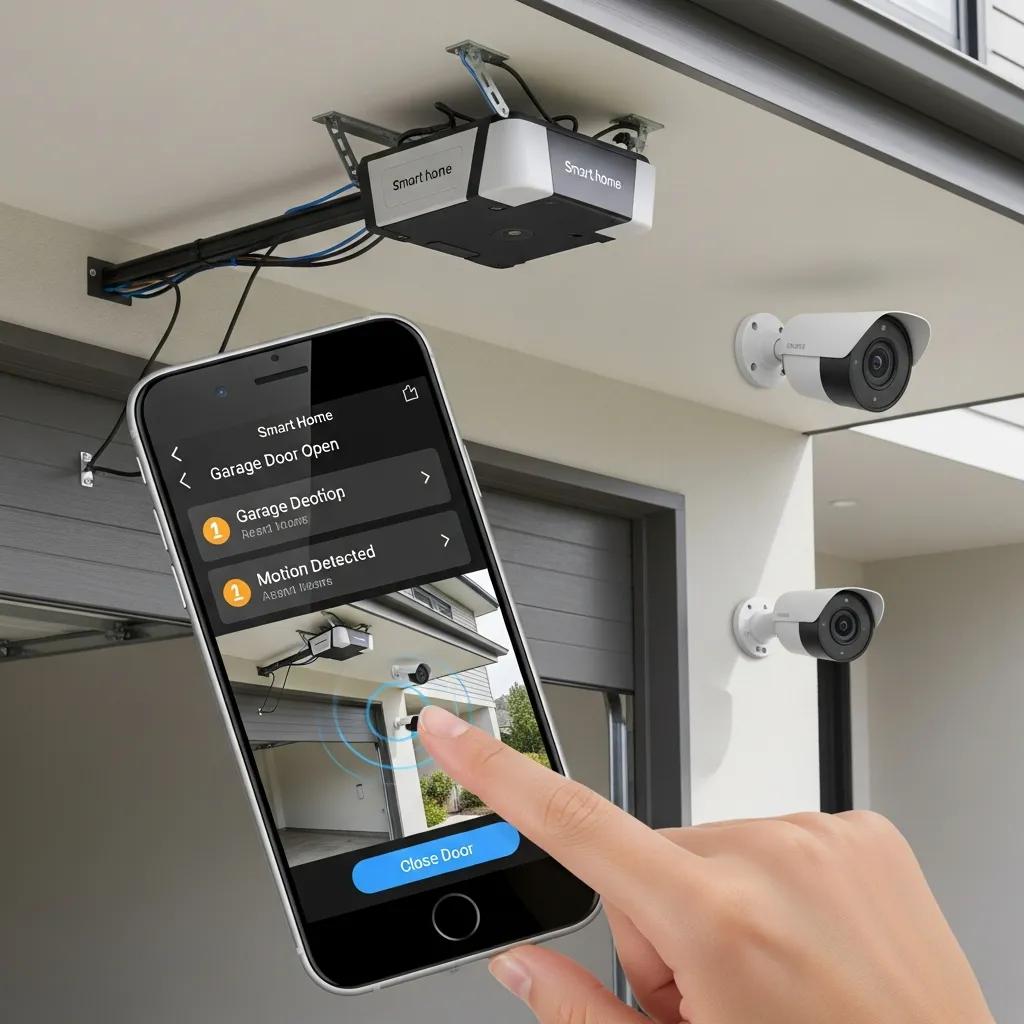
Smart garage door systems extend physical protection with encrypted communications, activity logging, and real-time alerts, reducing the success of remote attacks while improving situational awareness. Key security features include rolling-code (frequency-hopping) technology that prevents code grabbing, encrypted app-based authentication with multi-factor options, and automatic close/schedule features that avoid leaving doors open inadvertently. Integration with cameras and motion sensors allows the system to both detect unusual activity and record evidence; network security—timely firmware updates and strong Wi-Fi passwords—protects the system from being compromised.
The integration of advanced features like one-time password authentication in smart garage systems further strengthens defenses against unauthorized entry.
Smart Garage System Design for Enhanced Security
The smart garage system presented in this paper incorporates advanced security and remote control functionalities to enhance the user experience and ensure secure access. The implementation of a one-time password (OTP) authentication mechanism provides an additional layer of security, effectively preventing unauthorized access to the garage.
Design and Implementation of a Lightweight Smart Garage System: A Cost-Effective Approach, M Parmar, 2025
The table below compares smart opener features and recommended use-cases so homeowners can match capabilities to threat levels.
| Feature | Attribute | Recommended Use-case |
|---|---|---|
| Rolling-code encryption | Prevents replay/code grabbing | Essential for all homes with remote access |
| Activity alerts & logs | Real-time notifications of open/close events | Useful for monitoring hired help or deliveries |
| Remote lock / PIN pad | Local backup access control | For households that want keypad entry without remotes |
| Auto-close & scheduling | Closes door automatically after set time | Reduces accidental open-door exposure |
| Smart home integration | Works with hubs and cameras | Best for multi-layered security and automation |
This comparison shows rolling codes and alerts as core features, while integration with cameras and PIN pads adds convenience and redundancy. The next sections explain core smart opener features and how cameras/motion sensors connect into a complete security strategy.
What Features Do Smart Garage Door Openers Offer for Enhanced Security?
Modern smart garage door openers offer a set of features designed specifically to reduce unauthorized access and increase visibility into garage activity. Rolling-code technology randomizes transmitted codes so intercepted signals cannot be reused, while activity alerts and event logs notify homeowners immediately when a door opens or remains open, enabling quick response. Additional features like remote lock capability, PIN pad access, and auto-close settings reduce dependence on vehicle remotes and prevent doors being left open accidentally. When selecting a system, prioritize strong encryption, a reputable update policy, and the ability to integrate with cameras and alarm systems to form a cohesive deterrent and evidence-gathering platform.
However, as smart systems become more integrated and reliant on various edge devices, it's crucial to acknowledge the inherent IoT security vulnerabilities that can arise.
Smart Door System IoT Security Vulnerabilities Review
A smart door system, also known as a smart lock or intelligent door access system, is a modern Internet of Things (IoT) security technology that allows for remote and automated control of entry and exit within buildings or rooms in any smart environment (SE). These systems which frequently integrate with smartphones, keycards, or biometric authentication methods to improve security, convenience, and access control exhibit inefficiencies and setbacks for relying on various edge devices which introduce new vulnerabilities on daily basis.
Exploring the Efficiencies and Vulnerabilities of Smart Door Control Systems: A Systematic Review, 2023
Having secure opener features is more effective when paired with cameras and motion sensors, which provide detection and corroboration; the next subsection covers ideal specs and placements for those devices.
How Do Security Cameras and Motion Sensors Integrate with Garage Security?
Security cameras and motion sensors make garage security proactive by detecting suspicious activity and triggering alerts that can interrupt an attempted break-in; integration ensures events are logged and recorded for later review. Effective camera selection emphasizes night vision, wide dynamic range, and two-way audio when possible, and placement should cover the door exterior, interior opening area, and any side windows; sensors should overlap coverage and trigger lights or alerts. Pairing motion sensors with motion-activated lighting increases deterrence, and linking cameras to the opener means a recorded event is tied to an exact open/close action, improving incident context. Ensure camera firmware is updated and storage (cloud or local) is secured with strong account credentials to prevent tampering.
Integrated detection ties back to daily habits and maintenance; the next major section describes the routines and practices that keep garage defenses functioning and reduce human error that creates opportunities for burglars.
What Best Practices and Habits Help Maintain Optimal Garage Door Security?
Consistent habits and routine maintenance often produce more security than a single expensive upgrade because many attacks exploit predictable human behavior or neglected hardware. Simple practices—removing remotes from vehicles when parked, testing sensors and auto-close functions monthly, keeping exterior lights functional, and storing valuables out of sight—reduce opportunity and visibility for would-be thieves. Regular inspection of locks, panels, tracks, and the emergency release ensures small failures are fixed before they become an access point, and keeping smart system firmware updated protects against software-level vulnerabilities.
The list below highlights everyday actions that compound to form an effective, low-cost security posture.
- Inspect and test locks, weatherstripping, and opener sensors at least monthly to detect wear.
- Keep remotes out of vehicles overnight and use app or keypad access where possible.
- Use motion-activated lighting and schedule checks to ensure proper coverage and functionality.
- Store tools and valuables out of sight and secure internal entry doors to the home.
Adopting these habits maintains hardware and software defenses and reduces reliance on any single device; in the next two subsections we explore remote-management behaviors and lighting strategies that significantly lower night-time risk.
How Should You Manage Garage Door Remote Controls to Prevent Theft?
Remote control management is a behavioral defense: small changes like removing remotes from vehicles overnight, storing spare remotes securely, and switching to app-based authentication or PIN pads prevent easy theft or opportunistic use. If a remote is lost or a vehicle with a remote is stolen, promptly reprogramming or factory-resetting the opener invalidates the missing device; many modern systems provide simple re-sync procedures through apps or keypads. For households with multiple users, assign unique PINs or require app authentication to increase traceability and accountability. These behavioral changes reduce the chance that a stolen remote or an exposed fixed code will be the weak link that allows a burglar to enter unnoticed.
Why Is Motion-Activated Lighting Important for Garage Security?
Motion-activated lighting provides immediate, visible deterrence by dramatically increasing the perceived risk for an intruder and improving camera image quality for any recorded event. Proper placement covers approaches to the garage, side paths, and window exposures; sensors should be adjusted to avoid false triggers from street traffic or small animals while ensuring activation by human-sized movement. Combining motion lighting with camera triggers and an audible alert creates multiple layers of deterrence: sudden light exposure, visual recording, and possible notification to the homeowner or neighbors. Energy-efficient LED fixtures and adjustable timers provide a balance between constant illumination and responsive security, reducing both energy use and nuisance while maintaining a robust deterrent.
How Can You Perform DIY Garage Door Security Upgrades Effectively?
DIY upgrades are an affordable way to harden garage doors, but safety and correct technique are essential—garage door springs and openers carry high mechanical energy and electrical hazards, so homeowners should limit DIY to locks, reinforcement kits, sensors, and non-spring tasks.
Prioritize simple, high-impact projects: install a manual side-mount lock or deadbolt, apply a panel bracing kit, fit an emergency release shield, and mount motion sensors and cameras per manufacturer guidance.
Tools, time estimates, and safety notes are summarized in the table below so you can select tasks that match your skill level and minimize risk.
| Upgrade | Required Tools & Time | Skill Level & Safety Notes |
|---|---|---|
| Install side-mount lock | Drill, screws, 1–2 hours | Low skill; avoid spring areas |
| Fit steel bracing kit | Wrenches, drill, 2–4 hours | Moderate skill; ensure correct alignment |
| Mount emergency release shield | Screwdriver, 30–60 minutes | Low skill; preserve emergency operation |
| Install camera & motion sensor | Screwdriver, ladder, 1–2 hours | Low–moderate; follow electrical and Wi-Fi safety |
| Replace remote or reprogram opener | Manufacturer steps, 15–30 minutes | Low; keep access codes secure |
This table helps you choose DIY tasks by time and complexity; the following subsections offer step-by-step install guidance for a manual lock and for securing the emergency release safely.
What Are Step-by-Step Methods to Install Manual Locks and Reinforcement Kits?
Installing a manual side-mount lock or a surface deadbolt begins with measuring and marking alignment points, drilling pilot holes, and securing the lock body and strike plate to the door frame and floor or jamb as required. Tools typically include a drill with bits, a level, measuring tape, screwdriver, and appropriate fasteners; preparation includes clearing the work area and disconnecting any opener power if working near the motor. After mechanical installation, test the lock throughout the door’s full travel to ensure it does not bind and that the opener cannot override the lock; adjust strike plate placement if necessary. Common mistakes include misaligned strikes and insufficiently long fasteners—use recommended anchors and test under both static and loaded conditions to verify reliability.
How Can You Secure the Emergency Release Mechanism Yourself?
Securing the emergency release can be done safely using a tamper-resistant zip-tie method, a purpose-built release shield, or by repositioning the release cord out of reach while preserving interior emergency egress. The zip-tie technique threads a short, breakable tie around the release lever to prevent outside pulling but allows interior users to cut or snap it in emergencies; this method is quick and inexpensive but less durable than a metal shield. Commercial shields mount around the release to block external access while allowing inside operation, and they are preferable when code and safety allow; always ensure that any modification still permits emergency exit from inside and complies with local regulations. When in doubt—especially near springs or motorized mechanisms—consult a professional to avoid safety or functional compromises.


