


Solve common garage door issues in Toronto with our expert tips. Maintain safety and ensure proper function by addressing these problems effectively today!
Reasons to Love Your Garage Doors
- Your Garage door adds good value to your house
- Your garage door protects the things you need
- You probably go through the garage all the time
- Neglected Garage doors can destroy your needs
- Your Garage doors might hide dangers if you neglect the garage
- A garage can be a lot more fun place than you think
10 Common Garage Door Problems Toronto Homeowners Face and How to Fix Them
By Sal Debis, Dortech Garage Doors
Garage doors are essential for home security and daily convenience. Toronto homeowners commonly face issues that interrupt use and raise repair costs. This guide explains those problems and practical solutions, focusing on repair steps and preventive maintenance to protect function and lifespan. We cover faults such as broken springs, cable failures, and opener issues, and offer guidance for diagnosing and addressing them.
Broken Springs
Broken springs are a frequent cause of garage door failure. Springs balance the door’s weight so it opens and closes smoothly; when they break, the door may stick or become hard to operate. Noting signs such as a door that won’t open fully or hangs unevenly helps prompt timely repair. For professional help with garage door repair in Scarborough and nearby areas, Dortech Garage Doors Inc. provides experienced service.
How to Diagnose Broken or Worn Garage Door Springs
Inspect springs visually for gaps, broken coils, or corrosion. A sagging or uneven door often points to spring failure. Early visual checks frequently reveal wear before the issue escalates.
Research on torsion-spring fatigue shows that repeated loading cycles and stress concentrations can cause material failure. The study analyses torsion springs used in wooden furniture hinges and combines experimental and theoretical methods. It compares two test setups — one following TS EN 15570:2008 for door simulation and another optimised for efficiency — and examines changes such as adopting EN 10270-1 SH material and altering spring geometry, including square cross-sections and spiral interval adjustments. Finite element assessment supports strategies to improve torsion-spring fatigue life. Finite Element Assessment and Fatigue Life Improvement of the Torsion Spring in Hinge, R Bayrak, 2025
When and How to Perform Garage Door Spring Repair or Replacement
Address broken springs immediately. Spring replacement involves high tension and can be hazardous, so professional service is usually advisable. If you have the proper training, follow manufacturer instructions: release tension safely, remove the damaged spring, and fit the replacement. When uncertain, engage a qualified technician to ensure safety and correct installation.
Snapped or Frayed Cables
Cables lift the door via drums and are subject to wear. Frayed or snapped cables can prevent normal operation and create safety risks. Regular inspection for fraying or loose attachments reduces the chance of sudden failure.
How to Diagnose and Fix Common Garage Door Cable Problems?
Visually check cables for frays, kinks, or separation from the drum. If a cable is damaged or detached, secure the door before attempting any work. Cable replacement requires managing system tension safely; this is best performed by a professional to avoid injury and ensure correct reassembly.
Recognising how electric motors drive cable drums clarifies why cable integrity is critical for door movement.
Electric Motors and Cable Systems in Garage Doors
An electric motor actuates cable drums, which in turn spool two cables.
Commercial Garage Door Falls, Fatally Crushing Worker, 1995
Opener Malfunctions
Openers control automatic door movement, and failures often disrupt access. Typical signs include non-responsive remotes, the door reversing mid-cycle, or unusual noises. Identifying these symptoms helps prioritise troubleshooting steps.
What Are the Most Frequent Garage Door Opener Problems and Their Fixes?
Opener faults range from dead remote batteries to worn gears or motor issues. Start by replacing batteries and checking power and wiring at the opener. If problems continue, gears, motors, or sensors may need adjustment or replacement, which usually requires a trained technician.
How to Troubleshoot Garage Door Remote and Motor Failures
If the door remains unresponsive after checking power and batteries, test the remote signal and inspect the opener wiring. Verify that safety sensors are aligned; realignment often resolves unwanted reversals. These checks can fix many minor opener issues without full replacement.
Misaligned Tracks
Tracks out of alignment can cause the door to bind or derail. Symptoms include jerky movement or new, loud noises during operation, which indicate the tracks need attention.
How to Diagnose Misaligned Tracks
Visually confirm that tracks are straight and parallel. Look for dents, bends, or distortion in the metal that would obstruct smooth movement. Catching these signs early prevents further damage.
Solution Steps for Misaligned Tracks
To realign tracks, loosen mounting bolts, adjust the track position, then retighten bolts and test the door. If the door continues to catch or bind, contact a garage door technician for a thorough assessment and repair.
Worn Rollers or Hinges
Rollers and hinges wear with use, causing grinding noises and difficulty operating the door. Regular checks help identify these worn components before they fail.
How to Recognize Worn Rollers or Hinges
Inspect rollers for cracks, flat spots, or excessive play, and check hinges for rust or stiffness. Replacing damaged rollers or hinges restores smooth movement and reduces stress on other parts.
Maintenance Tips for Rollers and Hinges
Lubricate rollers and hinges periodically to lower friction and extend service life. For parts that show significant wear, replacement is the most reliable way to restore quiet and efficient operation.
Weather Seal Damage
Weather seals keep out drafts, moisture, and pests, and damaged seals can raise energy costs or allow water intrusion. Inspect seals regularly to maintain insulation and protection.
Symptoms of Damaged Seals
Look for gaps at the door’s base or seals that are cracked, warped, or compressed. Early replacement prevents energy loss and potential water damage inside the garage.
Repair or Replacement Methods
Replacing weather seals is a straightforward, homeowner-friendly task. Close the door, measure and trim the new seal to size, then fit it to restore insulation and a proper barrier against the elements.
Panel Damage
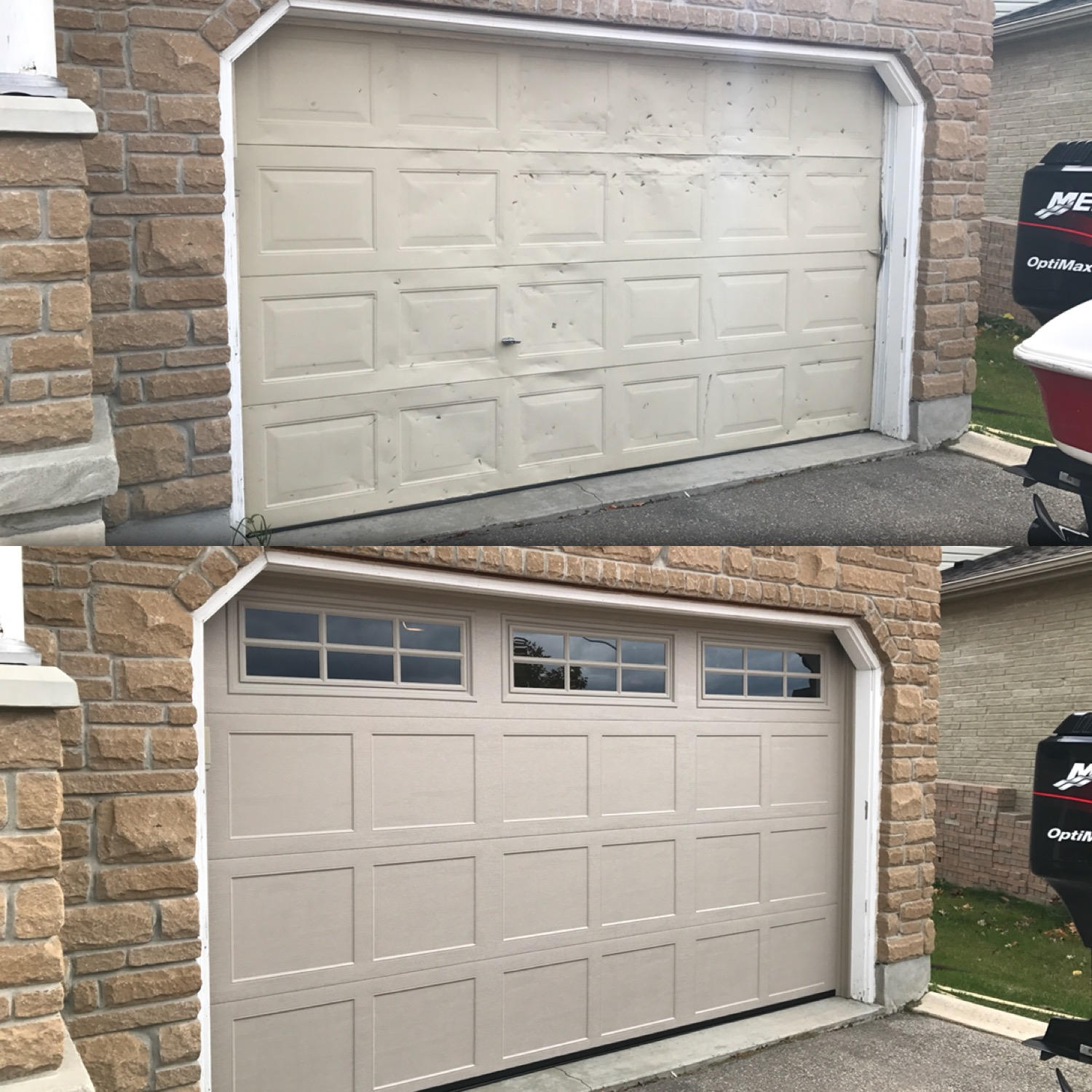
Panels can dent, crack, or scratch, which affects appearance and may reduce security or weather resistance. Addressing panel damage helps preserve both function and curb appeal.
How to Identify Panel Damage
Operate the door and inspect each panel for dents, cracks, or gaps that could allow water ingress. Early detection limits secondary problems and can simplify repairs.
When and How Should Garage Door Panels Be Replaced or Repaired?
Minor dents may be repaired with heat and form tools, while extensive cracking or structural damage often requires full panel replacement. Professional installation ensures panels fit correctly and the door remains balanced.
Unusual Noises
New or louder noises usually indicate parts are wearing or loose. Common sounds point to specific components that need maintenance or replacement.
Signs of Wear Indicated by Noises
Grinding, squeaking, and banging often signal a need for lubrication, tightening, or component replacement. Note the sound source to guide effective repairs.
Solutions to Address Noises
Regular lubrication and inspection of moving parts will reduce noise and extend component life. Persistent or worsening noises should prompt a detailed inspection to identify failing mechanisms.
Sensor Misalignment
Safety sensors stop the door from closing on objects or people. If misaligned or dirty, they can prevent the door from closing or cause unexpected reversals.
Understanding Common Sensor Issues
Sensors can shift from vibration or be blocked by dirt and debris. Regular checks and cleaning keep the sensor beam clear and functioning correctly.
Steps for Alignment and Repair
Align sensors so they face each other directly and clean the lenses with a soft cloth. These simple steps often restore normal operation and maintain safety.
Off-Track Doors
An off-track door is a safety hazard and indicates serious mechanical problems. Recognising the signs quickly helps avoid accidents and further damage.
Signs of Off-Track Doors
Indicators include a door that leans to one side or fails to close fully. Such symptoms require immediate attention to secure the door and inspect components.
Fixing Off-Track Doors
Begin by manually lifting and securing the door, then inspect tracks for obstructions or damage and realign the door. If you are not comfortable performing these steps, hire a qualified garage door technician to complete the repair safely.
Different garage door issues affect safety and daily use. Regular inspections and maintenance extend system life and reduce emergency repairs. For Toronto residents, Dortech Garage Doors Inc. offers comprehensive garage door installation, maintenance, and repair services that prioritise reliable solutions and preventive care.
See our portfolio for examples of completed work, or visit our gallery to review our craftsmanship and past projects.
If you are experiencing any of these problems or need a professional assessment, contact us for prompt, dependable service.
Frequently Asked Questions
Can I perform garage door repairs myself, or should I hire a professional?
Simple tasks like replacing weather seals can be done by a careful homeowner with basic tools. Complex or high-tension work involving springs, cables, or openers carries safety risks and generally requires professional training. For safe and reliable results, hire a qualified technician when in doubt.
How can I maintain my garage door to prevent common issues?
Schedule routine inspections and maintenance: lubricate moving parts, check cables and springs for wear, and verify track and sensor alignment. Addressing minor issues quickly prevents larger failures and reduces repair costs.
What should I do if my garage door won't open or close?
First, check the power supply and replace remote batteries. Confirm safety sensors are aligned and free of obstructions. If these steps do not restore operation, contact a garage door professional to diagnose mechanical or electrical faults.
How often should I have my garage door serviced?
Annual professional service is recommended to identify wear and keep the door operating reliably. If the door sees heavy daily use, consider more frequent inspections to address added wear.
What types of garage doors are the easiest to maintain?
Steel and fiberglass doors typically require less upkeep than wood, which needs regular painting or staining to resist weathering. Steel offers a durable finish, while fiberglass provides good insulation with minimal maintenance.
Are there specific signs that indicate I need to replace my garage door?
Consider replacement if the door shows severe dents, rust, or frequent breakdowns, or if it is more than 15–20 years old. If energy costs are rising due to poor insulation, a new, better-insulated door can be a cost-effective upgrade.
What is the average lifespan of a garage door?
A typical garage door lasts 15 to 30 years, depending on material and maintenance. Regular care—such as lubrication and inspections—helps maximise service life and maintain safe operation.
Conclusion
Proactive maintenance and timely repairs keep your garage door safe and reliable. Understanding common faults—like broken springs, cable wear, and opener issues—allows you to act early and avoid costly emergencies. Partnering with a qualified technician saves time and ensures correct, lasting repairs. Explore Dortech Garage Doors Inc. services to maintain peak performance and safety for your garage door.


